|
Dear colleagues and friends,
It’s tax season in Canada, so what better time to reflect on the choices we make through public expenditures? One of the most important tax-supported programs is Old Age Security (OAS), which together with the Guaranteed Income Supplement (GIS), forms a core foundation of income replacement and targeted poverty reduction critical to the wellbeing of older Canadians.
In a new commentary for the NIA, John Stapleton traces the dynamic evolution of OAS over the past century, illustrating how it has continually adapted to meet the needs of Canada’s changing demographics and policy priorities and how it might continue to do so in the future.
In the spirit of planning for the future, we’re also thrilled to be hosting Rob Carrick, former personal finance columnist at The Globe and Mail, for a webinar focused on our recently launched Cost of Ageing (COA) Calculator. Rob will join the NIA’s Dr. Bonnie-Jeanne Macdonald as a recent retiree and offer a candid perspective on the real costs of retirement today.
More from this March issue of our newsletter:
Thank you, as always, for your continued engagement and partnership.
Mark Hazelden
Interim Executive Director
National Institute on Ageing
|
|
|
|
|
A Century of Active Policy Design: Rethinking Old Age Security |
|
|
|
Old Age Security (OAS) and the Guaranteed Income Supplement (GIS) are often portrayed as static relics of Canada’s early welfare state. In reality, they reflect a century of active policy design designed to support income stability and alleviate poverty, respectively. Since the first federal pension was introduced in 1927, the system has been repeatedly redesigned in response to fiscal pressures, demographic change, immigration patterns and evolving ideas about universality and adequacy. From establishing a universal OAS in 1952, to a layered retirement income system alongside CPP/QPP in the 1960s, to the introduction of GIS in 1967, Canada’s retirement income system represents a series of deliberate policy choices, not accidents of history.
Over the decades, OAS and GIS have been indexed to inflation, shifted from payroll financing to general revenues, recalibrated through income recovery taxes, modified to reflect residency rules and sponsorship policies, strengthened for low-income seniors and made more flexible through deferral options and age-based benefit increases. Far from being politically frozen, they are among the most actively adjusted programs in Canada’s income security system.
It’s critical that any argument for OAS reform begins with an accurate understanding of its purpose, evolution and central role in supporting income security for older Canadians in an ageing society. |
|
|
| Read the full commentary by John Stapleton |
|
|
| Related bonus reading: Boomers aren’t really hoarding wealth, but an aging population requires reforms |
|
|
|
|
 |
|
|
Honouring Older Women in Canada on International Women's Day |
|
|
|
This month, the NIA was proud to join the global community in celebrating International Women's Day, a day to acknowledge the immense contributions of women throughout history and to recommit to the ongoing fight for gender equality. As we celebrate, it is crucial to shine a light on a significant and often overlooked group: older women in Canada.
According to the NIA’s Ageing in Canada Survey, older women are less financially able to retire compared to men and over 1 in 4 older women have less than $5,000 saved for retirement, compared with 1 in 5 across the population as a whole. This financial vulnerability can be attributed to several factors, including gender wage gaps during their working years and the fact that women are more likely to take time out of the workforce for caregiving responsibilities. Older women also experience intersectional biases of ageism and sexism, which are especially prevalent among women who are financially insecure.
Research and public policy should continue to examine the unique experiences of older women to ensure barriers are addressed where they arise. This includes:
-
Promoting financial security: Advocating for policies that address the gender wage gap, support caregivers and enhance retirement savings initiatives for women.
-
Combating discrimination: Challenging the intersectional biases that discriminate against older women.
-
Empowering older women: Providing opportunities for older women to participate fully in society and make their voices heard.
By working together to protect the rights of older women, we can create a society where all older adults can live with dignity and respect.
In the coming months, the NIA will be publishing an in-depth analysis of how racialized and low-income older women in Canada fare across the 10 indicators of the Ageing in Canada Survey. Stay tuned.
|
|
|
|
|
 |
|
|
 |
|
|
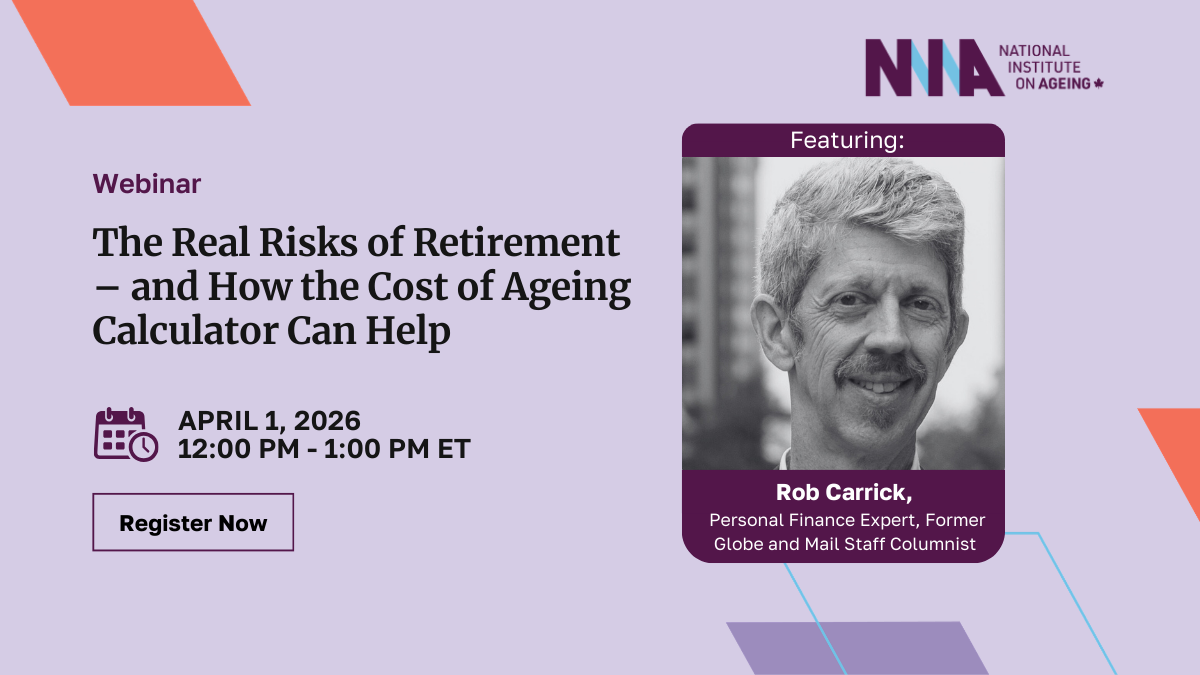
Webinar: The Real Risks of Retirement - and How the Cost of Ageing Calculator Can Help, featuring Rob Carrick |
|
|
|
Join us for a timely and practical conversation featuring Rob Carrick, former personal finance columnist at The Globe and Mail.
The webinar will introduce the NIA’s Cost of Ageing (COA) Calculator, a first-of-its-kind Canadian tool. Grounded in evidence and real data, the free calculator helps Canadians estimate future expenses and make more informed decisions about their financial readiness for later life.
Speakers:
-
Rob Carrick, former personal finance columnist, The Globe and Mail and recent retiree
-
Dr. Bonnie-Jeanne MacDonald, Director of Financial Security Research, NIA
Moderator:
Date: April 1, 2026
Time: 12:00–1:00 PM EST
|
| Register Here |
|
|
| Read Rob’s recent column featuring the Cost of Ageing Calculator in the Globe and Mail |
|
|
|
|
 |
|
|
New: French Shingles Report Available Now |
|
|
|
“Infections par le zona chez les Canadiens âgés : un problème ignoré, mais qu’il est possible de résoudre”
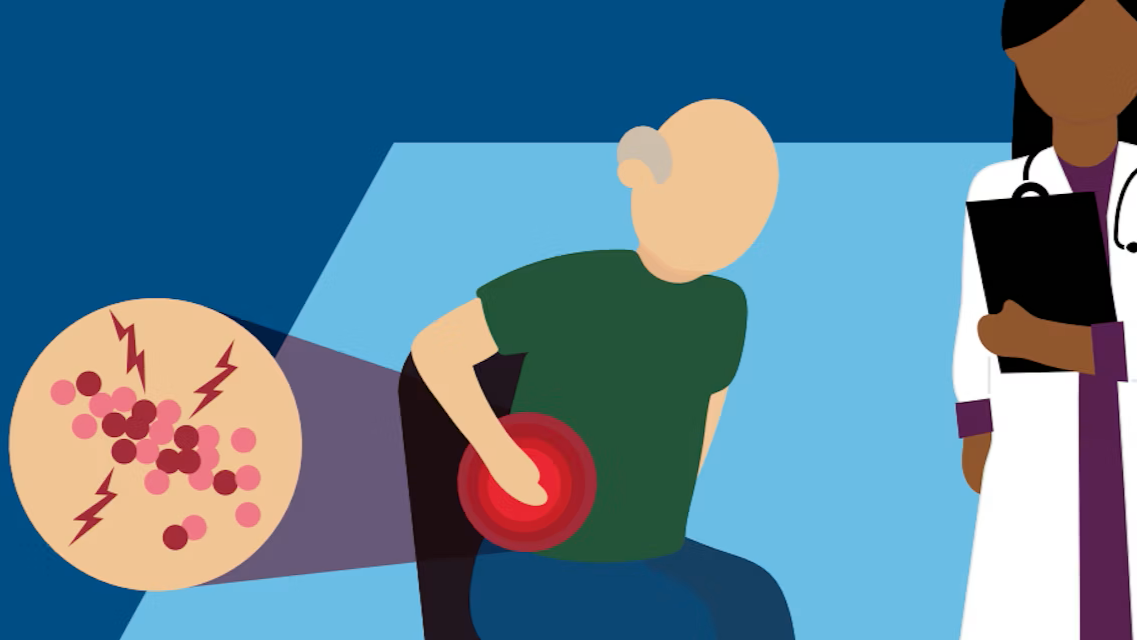
L'INV publie un nouveau rapport en français intitulé « Infections par le zona chez les Canadiens âgés : un problème ignoré, mais qu’il est possible de résoudre », qui examine l'état de la prévention du zona au Canada. Malgré les recommandations fermes du Comité consultatif national de l'immunisation (CCNI) du Canada, moins de quatre Canadiens sur dix âgés de 50 ans et plus ont reçu au moins une dose du vaccin contre le zona, avec des variations importantes d'une province et d'un territoire à l'autre.
S'appuyant sur les meilleures données disponibles, le rapport présente huit recommandations fondées sur des données probantes visant à renforcer la prévention du zona à travers le Canada — allant de la promotion d'une approche de la vaccination tout au long de la vie et de l'amélioration de la surveillance, à la suppression des obstacles financiers, au soutien des cliniciens et à l'élargissement de l'accès au vaccin. Ensemble, ces mesures visent à améliorer la couverture vaccinale, à réduire les souffrances évitables et à favoriser un vieillissement en bonne santé pour les Canadiens.
|
|
|
| Lire le rapport complet ici |
|
|
|
|
New: French Executive Summary of the 2025 NIA Ageing in Canada Survey |
|
|
|
Cette enquête annuelle, qui en est désormais à sa quatrième édition, reste l’un des aperçus les plus complets au Canada des expériences, des points de vue et des attentes des Canadiens âgés de 50 ans et plus. En examinant dix indicateurs clés du bien-vieillir — notamment le bien-être social, la sécurité financière, la santé et l’autonomie —, les résultats mettent en évidence à la fois les progrès accomplis et les défis persistants.
Ces informations constituent un appel à l’action pour les décideurs politiques, les organisations et les parties prenantes afin de promouvoir des solutions fondées sur des données probantes qui réduisent l’isolement social, améliorent la sécurité financière et renforcent l’accès aux soins.
|
|
|
| Lire le sommaire exécutif en français ici |
|
|
New: First PCE Report Available in French |
|
|
|
Le premier rapport du Centre d'excellence des pensions — Comprendre et communiquer la valeur des régimes de retraite d'employeur — est maintenant disponible en français. La version anglaise a été publiée en mars 2026, juste après la Semaine nationale de sensibilisation à la retraite.
Ce rapport propose des idées et des solutions que les employeurs, les promoteurs de régimes, les administrateurs, les gestionnaires et les autres acteurs impliqués dans la mise en œuvre des régimes de retraite d'entreprise peuvent adopter pour aider les salariés à mieux comprendre et apprécier la valeur ajoutée de ces régimes.
|
|
|
| Lire le rapport en français ici |
|
|
|
|
Vaccines for Older Adults: What you Need to Know to Stay Healthy and Independent |
|
|
|
Arushan Arulnamby, Policy Analyst, highlights why vaccines such as influenza, RSV, COVID-19, pneumococcal, shingles, tetanus and diphtheria are especially important for older adults, along with the latest national recommendations and what is publicly covered in B.C.
This webinar was part of the Embrace Aging series, co-supported by Interior Health and the Institute for Healthy Living and Chronic Disease Prevention at UBC Okanagan.
|
|
|
 |
|
|
New: Multilingual Vaccine Guides for Older Adults |
|
|
|
The NIA’s updated Provincial and Territorial Vaccine One-Pagers are now available in multiple languages to better support older adults across Canada. These easy-to-understand charts outline recommended vaccines for those aged 65+, including which are publicly covered in each province and territory and where to find trusted information.
We have also published an updated version of our detailed guide to understanding the current state of COVID-19 vaccinations in English, French, Chinese, Greek, Italian, Portuguese, Punjabi, Spanish and Tagalog. Please find the guide here.
|
|
|
Watch or Rewatch our Rethinking Dementia Care Webinar |
|
|
|
Missed our recent webinar on how primary care can play a leading role in improving dementia diagnosis and care in Canada? You can now watch or rewatch the conversation.
In this webinar, experts discussed how innovative, local team-based models — including the MINT Memory Clinic model — are helping transform dementia care across Canada.
|
|
|
 |
|
|
 |
|
|
 |
|
|
|
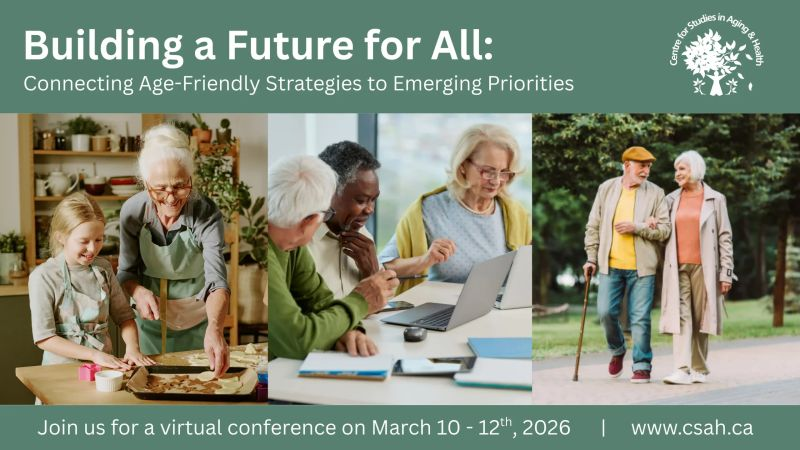
On March 10, Talia Bronstein, Director of Policy, presented Building a Future for All: Connecting Age-Friendly Strategies to Emerging Priorities, a virtual conference hosted by the Centre for Studies in Aging & Health. Talia’s presentation focused on the importance of upstream investments to enable ageing well, highlighting how early and coordinated action can improve outcomes for older adults while reducing long-term system pressures.
|
|
|
|
|
|
|
|
|
|
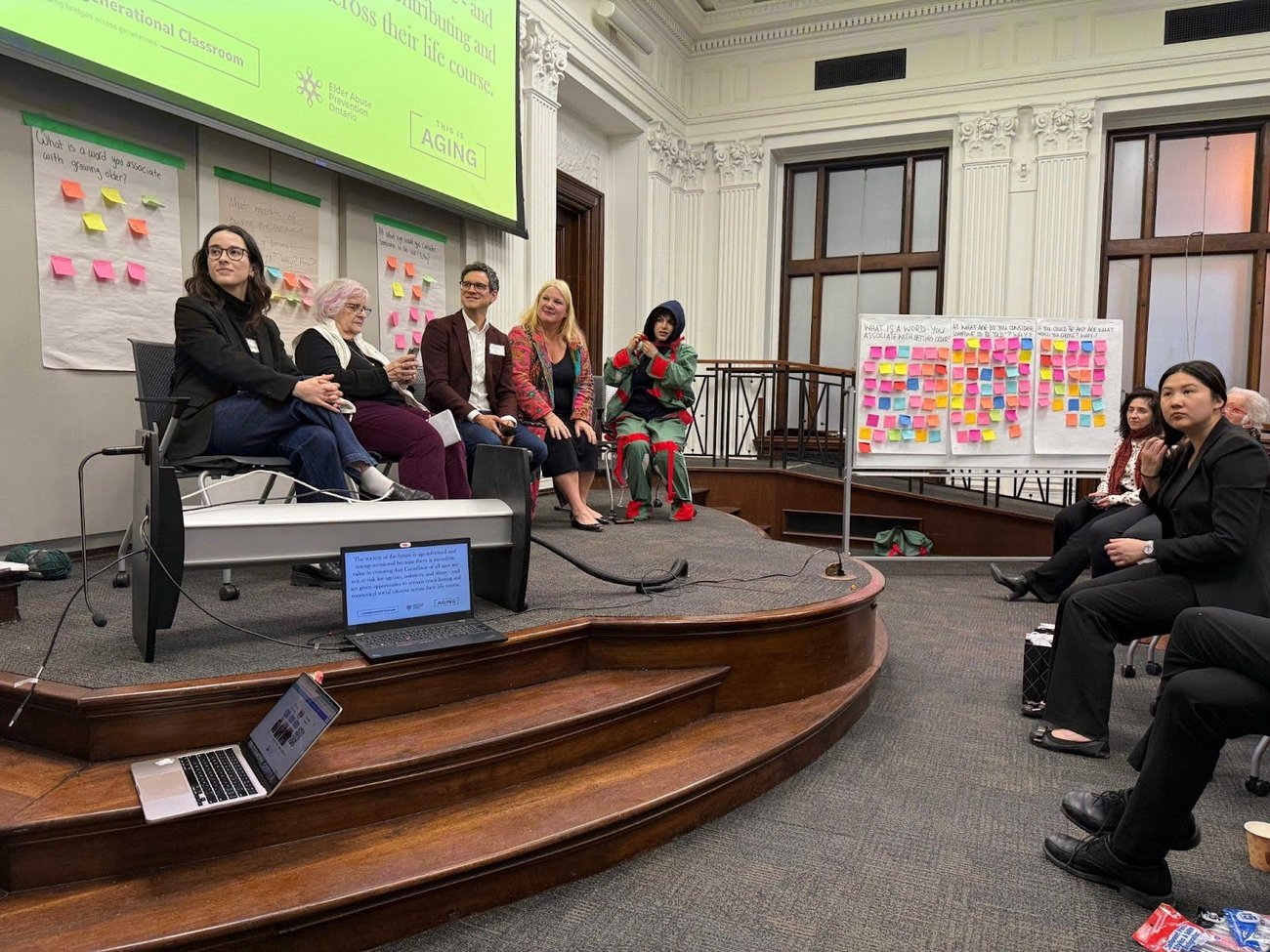
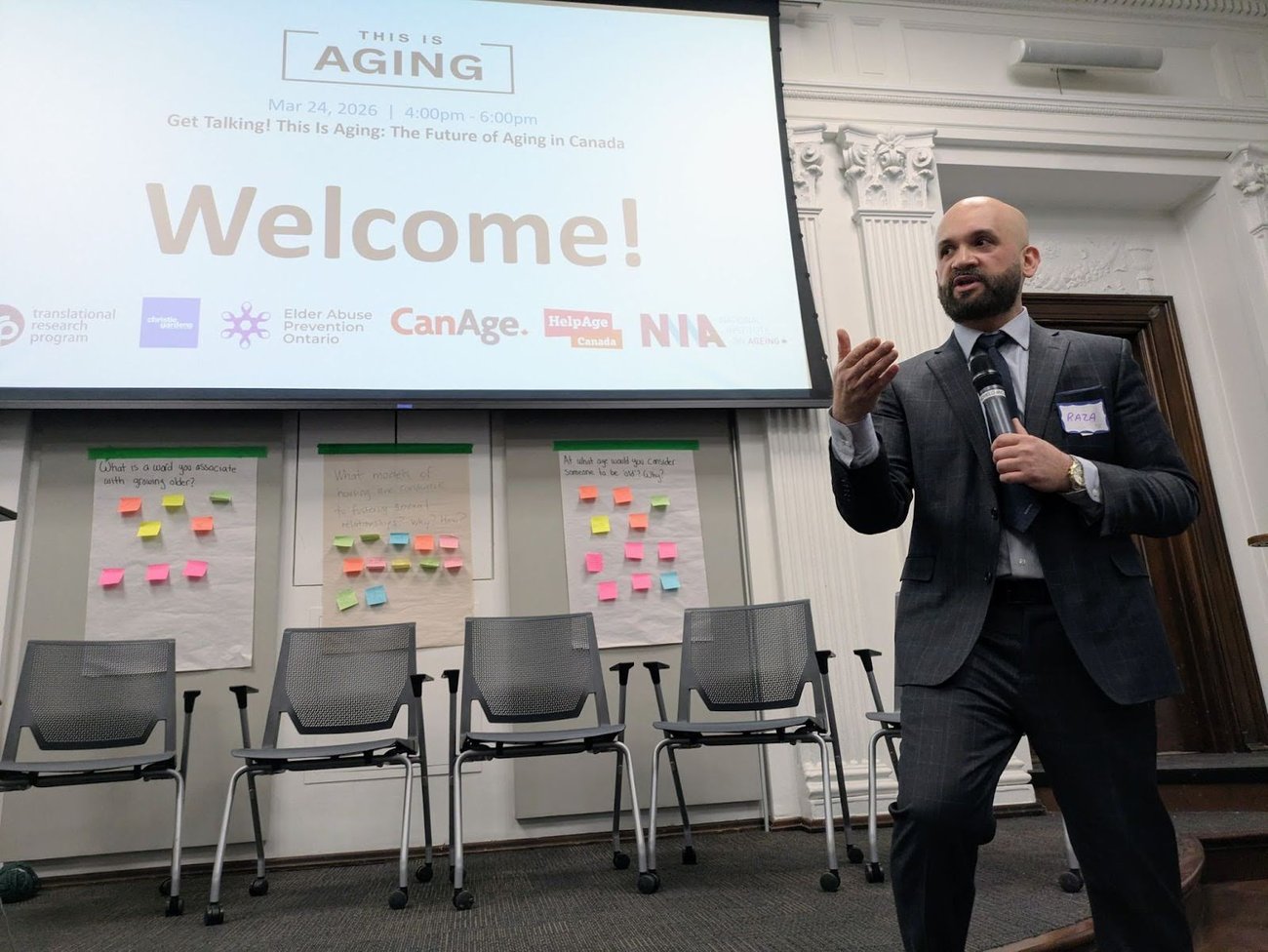
On March 24, NIA Interim Executive Director Mark Hazelden participated in Get Talking! This Is Aging: The Future of Aging in Canada, an in-person panel discussion hosted as part of Professor Raza Mizra’s (U of T, HelpAge) Intergenerational Classroom discussion series. The event created space for thoughtful dialogue on how Canada can better support older adults and ensure their rights, needs and voices are reflected in the systems and policies that shape later life.
|
|
|
 |
|
|
|
|
Fraud Prevention Month |
|
|
March is Fraud Prevention Month |
|
|
|
Fraud remains one of the most common crimes affecting older adults in Canada and scams are becoming increasingly sophisticated. Staying informed and supporting one another are important steps in preventing fraud and protecting older Canadians.
Common scams targeting older adults include:
-
Grandparent scams: Urgent requests for money from someone pretending to be a family member in distress.
-
Investment scams: Promises of high returns with little or no risk.
-
Romance scams: Fake online relationships used to build trust and request money.
-
Bank investigator scams: Fraudsters posing as bank staff or law enforcement officials.
-
Recovery scams: Fake services claiming they can recover money lost to previous fraud.
There are simple steps that can help reduce the risk of fraud. Older adults are advised to pause before responding to urgent requests, verify information directly with trusted sources, never send money under pressure and talk openly with family and friends about scams.
To learn more about common scams targeting older Canadians, watch this video from the Government of Canada.
Additional resources are also provided by the Canadian Anti-Fraud Centre.
|
|
|
|
|
 |
|
|
Sector Events:
|
|
|
 |
|
|
|
|
|
|
|
|
|
|
TMU National Institute on Ageing Fund |
|
Help create a Canada where older adults feel valued, included, supported and better prepared to age with confidence by making a charitable gift to the TMU National Institute on Ageing Fund today. Gifts to the TMU National Institute on Ageing Fund make a tangible impact on the future of ageing in Canada. You choose the amount. You make the difference. |
|
| DONATE TODAY! |
|
|
|
|
|
|
|